


A world of sweet romance with a whisper of angels' wings
Welcome to my cyber-home!
Hi, I'm Delia (and just so you don't waste time wondering...in my case, that's pronounced Deela). I'm an author of Inspirational Romance and Women's Fiction, with an occasional simply clean and wholesome short story or perhaps a devotion tossed in the mix. You'll always find a touch of the divine in my tales of sweet romance, so I hope you're not put off by the subtle flutter of angels' wings. Does the idea of unexpected hugs from Heaven make you uncomfortable...or does it make you say, "Me too, Lord - my turn!"? I truly hope you chose the latter, because miraculous moments are part of the tapestry when God weaves the story. I love those special touches, and if you don't already, I pray you will once you've read the stories of faith and love that God has inspired in me. I'd love to hear from you after you've had a chance to explore my novels, novellas, and short stories. Be blessed...and read on!



NEWEST RELEASES
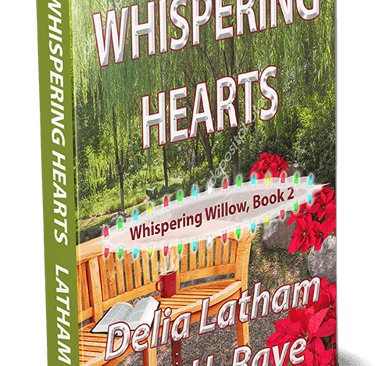
Whispering Hearts
Book 3, Whispering Willow Series
The Prodigal Preacher's Christmas Homecoming
(A Christmas Inheritance )



Will love once again come calling, only to leave them broken…in the middle of the most wonderful time of the year?

This Christmas, love comes wrapped in shared memories and whispered prayers.
Morning Rendezvous
A short collection of devotions and random musings by Inspirational Romance Author Delia Latham. Within its pages is a heaping heartful of love, hope, faith, encouragement...even a bit of humor. Grab your Bible and a cup of something warm and soothing. Make yourself comfortable, and come on in. Prepare to be blessed...

Devotions & Musings from My Heart to Yours


Crossing Cheyenne
A short collection of devotions and random musings by Inspirational Romance Author Delia Latham. Within its pages is a heaping heartful of love, hope, faith, encouragement...even a bit of humor. Grab your Bible and a cup of something warm and soothing. Make yourself comfortable, and come on in. Prepare to be blessed...


Subscribe to Brushing Wings
Sign up for my newsletter and receive a FREE electronic copy of Love Comes Lately as my personal thank you.




His heart’s been a long-time broken and painfully scarred. Is it too late for love?
Andrew Hart is the beloved owner of Heart's Haven, an East Texas cottage-rental complex where love lives and angels walk. Somehow, the elderly bachelor has managed to escape falling in love himself—or so everyone thinks—and Vivian Mallory despairs of ever being anything more than the crusty bachelor's best friend. When he reveals a decades-old mistake that sentenced him to a lifetime alone and has never yet ceased to haunt his heart and mind, Viv has little choice but to let Andrew go and move on with her own life.
Only Grace can heal Andrew’s guilt-ridden heart and open the door to love before Viv closes it forever.
Heaven's Touch Designs
ATTENTION AUTHORS:
Does your manuscript need editing? Are you looking for reasonably priced cover art design? Marketing material design services?


DAYS OF MY LIFE
Back before Covid changed everything, I started a slice-of-life podcast, and I was really enjoying it and getting positive feedback. But I let it drop when I got the virus and was sick a long time. I plan to get it up and going again as soon as I can. Watch for it!


Looking Ahead:Future Pages on this Site